About the Book
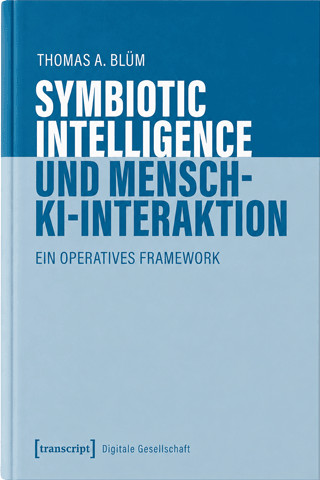
Symbiotic Intelligence and Human-AI Interaction
How much intelligence is really contained in artificial intelligence? Symbiotic Intelligence describes a theoretical and operational framework that understands intelligence not as a property of isolated actors, but as an emergent phenomenon of human-AI interaction.
At the centre are resonance loops and adaptive feedback cycles through which AI can operate as a cognitive coprocessor and enable insights that neither the human nor the system could produce alone.
Against the idea of fusion or control, Thomas A. Blüm focuses on new architectures and boundary integrity as foundations of stable long-term interaction, offering a clear reference framework for research and teaching in human-AI interaction, cognitive science and systems theory.
The book is intended for researchers and practitioners who do not merely use human-AI interaction, but want to understand and design it structurally. It positions itself as an architectural reference framework for stable, long-term interaction systems.
The book is available through
transcript Verlag,
platforms such as
Autorenwelt
and local bookshops. Out-of-stock or non-shelved titles are usually available there within 1–3 working days.
Search local bookshops with Ecosia🌱.
FAQ
This FAQ accompanies the book Symbiotic Intelligence and Human-AI Interaction. It provides orientation on central concepts, the theoretical perspective of the book and common misunderstandings around human-AI interaction. This FAQ will be updated as needed.
Note on terminology: This website does not use the terms “Human–AI Interaction” and “Human–Model Interaction” synonymously. “Human–AI Interaction” refers to the broader research field. “Human–Model Interaction” describes the specific interaction between a human and a model, typically a language model, within the asymmetric dyad described in the book. The terms therefore refer to different levels of analysis.
About the Book
What is Symbiotic Intelligence about?
The book examines how humans can build stable epistemic working structures with modern language models over longer periods of time. Its focus is not productivity or automation, but stability, structural guidance, drift control and the architecture of long-term human-model interaction.
Who is the book for?
The book is intended for researchers, analysts, creatives, strategists, technologists, authors and readers who want to understand human-AI interaction structurally, not merely use it.
Do I need technical prior knowledge?
No. The book is written in a way that remains broadly accessible even to readers without a technical background.
However, it is not intended as a simple introductory book. Its focus lies on conceptual understanding, long-term interaction dynamics and structural questions of human-AI interaction.
Programming skills or advanced mathematical knowledge are not required, but a willingness to engage with abstract and interconnected thinking certainly helps.
On Human-AI Interaction
Why does the book speak of “asymmetry”?
Because humans and models have different functions. The model generates probabilistic structural variation, but it has no consciousness, no intentionality and no epistemic responsibility. Meaning remains on the human side.
What does “dyad” mean?
The term dyad derives from the Greek word for duality and generally refers to a relationship between two entities.
In the context of this book, it describes the stable asymmetric interaction structure between a human and a language model. It defines the roles, boundaries and stability conditions of the collaboration.
The human remains the bearer of meaning, the orientation system and the epistemically responsible agent. The model remains a probabilistic structural system within this coupling.
What is the “Zwischenraum”?
The term Zwischenraum (German, pronounced [ˈtsvɪʃn̩ˌʁaʊ̯m]) is intentionally retained in its original language because no single English word captures its theoretical meaning.
Within the framework of Symbiotic Intelligence, the Zwischenraum denotes the relational epistemic structure that emerges through the interaction between a human and a language model. It belongs neither exclusively to the human nor to the model.
The human contributes meaning, orientation, and responsibility. The model contributes probabilistic structural variation. Through their exchange, a new mode of collaborative reasoning becomes possible.
Symbiotic Intelligence does not emerge in the human alone. It does not emerge in the machine alone. It emerges through their interaction — in the Zwischenraum.
The Zwischenraum is therefore not a physical or technical space but the relational architecture in which ideas can be explored, stabilized, challenged, reconstructed, and further developed.
Is this simply “better prompting”?
No. The book argues that stable human-model interaction does not arise from isolated prompts, but from long-term structural guidance, consistency and drift control.
Why does Symbiotic Intelligence distinguish itself from human–AI fusion concepts and singularity theories?
Symbiotic Intelligence addresses a different question. Human–AI fusion concepts and singularity theories envision futures in which people technologically enhance their biological or cognitive capabilities or merge more closely with AI. This raises fundamental societal questions: Who will have access to such technologies? Who will be able to afford them? And what happens if some people deliberately choose not to adopt them?
Even under conservative assumptions, at least three groups could emerge: technologically augmented individuals, those without access to augmentation, and those who consciously reject it. Such differences could give rise to new forms of social, economic and political tension.
Symbiotic Intelligence therefore follows a different approach. The framework is based on stable collaboration between humans and AI without requiring biological or technological modification of the human being. In principle, participation is open to everyone and does not depend on implants or physical augmentation. The asymmetric distribution of roles—human meaning and epistemic responsibility on one side, machine-generated structural variation on the other—remains intact.
On Method
How did the theory behind the book emerge?
The theory emerged from the analysis of long-term documented human-model interaction. Its focus was on real working processes, recursive collaboration, semantic compression and the observation of stability and drift mechanisms.
Why does stability matter so much?
Because probabilistic systems do not produce fixed deterministic answers. They produce variation. Without stabilisation, semantic drift, disorientation or anthropomorphic misreadings can occur.
What does “drift” mean?
Drift describes the gradual displacement of semantic or structural coherence within an interaction. It can arise from unclear goals, inconsistent concepts or unstable interaction guidance.
On Concepts and Misunderstandings
Why does the book avoid anthropomorphic AI language?
Because anthropomorphic terms often confuse technical processes with human properties. The book therefore does not describe language models as persons or conscious entities, but as probabilistic structure machines within an interaction architecture.
Why does the book not speak of “hybrid intelligence”?
Because that term often implies a mixing or fusion of human and machine. Symbiotic Intelligence instead describes a controlled coupling of clearly separated roles.
Is the Scout in Symbiotic Intelligence related to Microsoft Scout?
No.
The term Scout was introduced in Symbiotic Intelligence on June 11, 2026, to describe the human leadership role within human–AI interaction.
Several weeks later, Microsoft introduced an autonomous AI agent under the same name. The similarity in naming is purely coincidental; the underlying concepts are fundamentally different.
In Symbiotic Intelligence, the Scout refers to the human as the structurally guiding and epistemically responsible participant. Microsoft, by contrast, uses the term to refer to an AI system.
Is the model a co-author of the book?
Not in the human sense. The model has no intentionality, no responsibility and no understanding in the human sense. At the same time, the book would probably not have emerged in this specific form without the long-term human-model interaction described in it.
On Technical Development
Why could this book not have been written a few years ago?
Earlier systems could generate text, but they could not support long-term coherent epistemic processes.
Only modern large language models reached sufficient levels of context stability and semantic continuity.
At the same time, new forms of human–model interaction first had to be developed and explored.
The necessary practices did not emerge centrally, but were independently discovered, tested and refined by individual users as they explored new forms of long-term human–model interaction.
When did this form of collaboration become technically possible?
The decisive threshold lay roughly between 2024 and 2025.
Only modern models reached a level at which long-term recursive collaboration became practically possible.
Was this technical threshold alone sufficient for stable human–model dyads?
No. The technical prerequisites were necessary, but not sufficient.
Stable dyads emerge only through the combination of model capability and interaction competence.
Structural guidance, drift control, reconstruction and structural stabilisation had to be learned just as much as working with the models themselves. The emergence of stable dyads therefore required not only more capable systems, but also new forms of interaction competence.
Why do the same models produce very different results with different people?
Because the quality of the interaction depends strongly on human structural guidance.
The model merely provides the possibility.
Whether this develops into a stable epistemic architecture – the dyad – depends substantially on how the interaction is conducted.
Why does accessible hardware play a role in the background of the theory?
The book addresses this question mostly implicitly, but it was part of the underlying considerations behind Symbiotic Intelligence.
In the long term, human-AI interaction should not depend exclusively on highly centralised cloud platforms or a small number of global hyperscalers.
Some of the concepts were therefore intentionally developed in a way that could ultimately remain usable with comparatively accessible hardware, local language models and limited infrastructure. An important resilience factor.
This also relates to the question of technological participation: Emerging and developing regions should not be permanently excluded from the development of epistemic tools simply because hyperscaled infrastructure is unavailable.
On Scientific Framing
What is an epistemic coprocessor?
An epistemic coprocessor (“epistemic” = related to knowledge and understanding) is the functional role a language model can assume within a stable dyad.
In this role, the model supports structuring, variation, recombination, perspective simulation and semantic exploration.
The human remains the epistemic main system and continues to carry meaning, evaluation and responsibility.
Does this form of collaboration change scientific work?
Possibly. The book argues that epistemic coprocessors could become new epistemic infrastructures that change the speed of thinking, structural capacity and interdisciplinary knowledge work.
Does Symbiotic Intelligence apply only to individual human–AI dyads?
No. The book deliberately focuses on the dyad as the smallest productive unit of symbiotic interaction. At this level, the theoretical foundations, stability mechanisms, and methods are developed.
The question of how multiple human–AI dyads can work together leads to a further architectural level. As AI becomes more widely adopted, networks of independent dyads emerge, each of which may develop its own markers, semantic anchors, and drift-control mechanisms.
This creates a new challenge: epistemic fragmentation. The scaling question then no longer lies in improving individual models, but in building shared epistemic infrastructures between dyads.
This question is addressed in the accompanying conceptual paper From Dyads to Networks – Architectural Scaling of Symbiotic Intelligence (Blüm, 2026). The paper introduces the concept of Networked Symbiotic Intelligence and outlines how multiple dyads can be connected through shared semantic anchors, drift monitoring, and resonance structures. The paper is available via DOI: 10.5281/zenodo.19034255.
The dyad remains the fundamental operational unit. The network extends the architecture, but does not replace it.
Is the book technology-optimistic or technology-critical?
Neither. The book describes structural properties of modern human-model interaction and examines opportunities, risks and stability conditions without framing them ideologically.
On Risks and Limits
Why can human-model interactions become destabilising?
Because probabilistic systems can reinforce patterns and generate semantic feedback loops. If orientation, level separation or conceptual stability are lost, the epistemic quality of the interaction can become unstable.
Is this book about AGI or superintelligence?
No. The book makes no claims about artificial consciousness or future superintelligences. Its focus is on existing language models and stable human-AI interaction.
What does the theory explicitly not claim?
The book does not describe a fusion of human and machine, a shared cognition or a replacement of human judgement. The stability of the dyad arises precisely from the clear separation of roles.
On the Working Process
How did the book emerge in practice?
The book emerged within long-term human-model interaction, using iterative working processes, recursive compression and continuous drift control. Responsibility for structure, evaluation and meaning remained on the human side.
Why does the theory seem unusual?
Because it did not emerge from conventional AI narratives. Its focus is less on technology alone than on the form of stable interaction between humans and probabilistic systems.
Where can I learn more about the work?
Further information about ongoing projects, working papers, research activities and the Hybrid Evolution series can be found at the main website Thomas A. Blüm, via LinkedIn, SSRN, Zenodo, Open Science Framework (OSF) and further platforms around Hybrid Evolution.
Miscellaneous
How can I cite the book correctly?
Blüm, Thomas A. (2026): Symbiotic Intelligence and Human–AI Interaction.
Bielefeld: transcript Verlag. ISBN 978-3-8376-8304-2.
DOI: 10.14361/9783839479100
Will there be versions in languages other than German?
Translations into up to eight languages are currently planned, including English, Spanish, Portuguese and French.
Whether these editions will ultimately be realised depends largely on the reception, reach and demand generated by the first book.
At the same time, parts of the broader research architecture are already accessible internationally through related English-language working papers.
One example is Epistemic Coprocessors and the Emergence of Stable Human–Model Dyads (2026), which develops aspects of the underlying theoretical framework surrounding recursive human–AI interaction, epistemic infrastructure, and asymmetric interaction architectures.
The paper is available via SSRN DOI: 10.2139/ssrn.6766938 and Zenodo and may serve as an initial point of access for international readers until potential translated editions of the book become available.
Update 11.06.2026:
The publication of the English edition is no longer a question of if, but of how and with whom. I already have a publishing path available, which means I can confidently say:
The English edition is coming!
What has changed over the past months is not the project itself, but the surrounding research landscape. Questions of long-term human–AI collaboration are rapidly moving into the center of AI research, making this the right moment to bring the work to an international audience.
I'll share more as soon as there is something concrete to announce.
Will there be another book?
Theoretically yes, although that will still take some time.
Whether these editions will ultimately be realised depends largely on the reception, reach and demand generated by the first book. Interest from international academic publishers and university presses may also play an important role.
Research Architecture & Accompanying Papers
The book Symbiotic Intelligence and Human-AI Interaction did not emerge in isolation, but as part of a broader research architecture connected to the Hybrid Evolution project.
The accompanying works investigate different aspects of stable human-AI interaction, including drift, resonance, epistemic stabilisation, interaction dynamics and the architectural conditions of long-term human-model collaboration.
Rather than forming a loose collection of individual publications, the papers constitute an increasingly interconnected conceptual structure with a shared terminology and recursive cross-references.
About the Development of the Research Architecture
How did this research architecture emerge?
Most of the papers, conceptual frameworks and the manuscript itself were developed within less than a year, with the core structure emerging during approximately four to five months of sustained human-model interaction.
This unusually compressed development process was not the result of automated content generation, but of recursive structural collaboration within a stable human-model dyad.
The human side retained semantic direction, conceptual evaluation and epistemic responsibility, while the model contributed recursive restructuring, variation, condensation and the cross-linking of complex conceptual spaces.
The resulting body of work should therefore not be understood as a collection of isolated papers, but as a progressively interconnected research architecture focused on stable long-form human-AI interaction.
Several central concepts, including drift, resonance, reconstruction, mode stability and boundary integrity, emerged directly from observing and stabilising the interaction process itself.
The project does not claim to prove these concepts empirically in a finalised sense. Rather, it documents an early-stage conceptual and operational framework for investigating long-term human-model collaboration under conditions of sustained recursive interaction.
Core Architecture
Hybrid Evolution – The Epistemic Coprocessor Concept
This preprint introduces the concept of generative AI as an epistemic coprocessor. At its centre lies the idea of a stable asymmetric dyad: the human carries meaning and epistemic responsibility, while the model generates structural variation, recombination and pattern condensation.
The paper forms one of the central conceptual foundations of the later Symbiotic Intelligence architecture.
Link to paper: DOI: 10.5281/zenodo.17552541
Cognitive State Architecture – A Conceptual Model of Integration and Control in Human and Hybrid Cognition
This working paper develops Cognitive State Architecture as a conceptual model of cognitive state dynamics in human and hybrid cognition.
The framework is based on two dimensions: integration density and control stability. It describes processing modes such as linear reasoning, pseudoparallel switching, high-density integration, fragmentation and overload.
Within the research architecture, CSA functions as a theoretical bridge between cognitive dynamics, human–AI interaction and the operational architecture of Symbiotic Intelligence.
Paper link: DOI: 10.5281/zenodo.18900604
High-Integration Boundary States in Human–AI Interaction
This conceptual working paper describes a retrospectively reconstructed boundary state of high-integration human–AI interaction within the Cognitive State Architecture (CSA) framework.
The paper focuses on integration density, control stability and possible transitions between efficient high-performance processing, increasing regulatory cost and emerging fragmentation.
It proposes a minimal phenomenological structure for such boundary states and discusses potential markers such as “mental burning” and “articulation latency”.
Paper link: DOI: 10.5281/zenodo.19240687
Interaction Dynamics
Humor as Semantic Pressure Regulation in Human–AI Interaction
This conceptual working paper investigates humor not primarily as entertainment or anthropomorphic social simulation, but as a potential regulatory mechanism within long-term recursive human–AI interaction.
Its central focus includes semantic compression, reconvergence, drift regulation and the question of how humorous micro-events may contribute to the stabilization of highly compressed epistemic interaction spaces.
The paper describes humor as a form of temporary semantic relief without loss of epistemic coherence. Particular attention is given to language-dependent reconstruction processes, transition dynamics and dyad-specific semantic reference spaces.
Within the broader research architecture, the paper extends existing work on drift, resonance, boundary states and Cognitive State Architecture by introducing a microdynamic perspective on recursive interaction stabilization.
Link to paper: DOI: 10.5281/zenodo.20415629
The Instability of Alignment in Human-AI Systems
This essay argues that alignment in long-term human-AI interaction is not a stable property of models, but a dynamically unstable process.
Its focus lies on how semantic drift can emerge even without visible errors and gradually destabilise long-form interaction.
Link to paper: DOI: 10.5281/zenodo.19430584
Mode Misclassification in Long-Dialog Human-AI Interaction
This working paper investigates operational mode misclassification within sustained human-model interaction.
It describes situations in which models generate locally coherent but functionally inappropriate responses because the current interaction mode is probabilistically inferred incorrectly.
Link to paper: DOI: 10.5281/zenodo.18376271
Stability & Scaling
Neurocognitive Adaptation in Symbiotic Intelligence
This framework examines long-term neurocognitive adaptation and reorganisation processes within stable human-LLM interaction.
Its focus includes delegation gradients, cognitive offloading and the question under which conditions interaction becomes adaptive or erosive.
Link to paper: DOI: 10.5281/zenodo.18772480
From Dyads to Networks – Architectural Scaling of Symbiotic Intelligence
This paper extends Symbiotic Intelligence from individual dyads towards networked epistemic infrastructures.
Its central topics include collective drift observation, distributed stabilisation and the question of how asymmetric human-AI dyads can be embedded into larger knowledge systems.
Link to paper: DOI: 10.5281/zenodo.19034255
Author
Thomas A. Blüm, born in 1967, is an author and independent researcher. His work examines how technological systems, cultural imaginaries of the future and human thinking interact.
Further information about Thomas A. Blüm, publications, projects and contact options can be found on the main website: thomas-a-bluem.de/en.